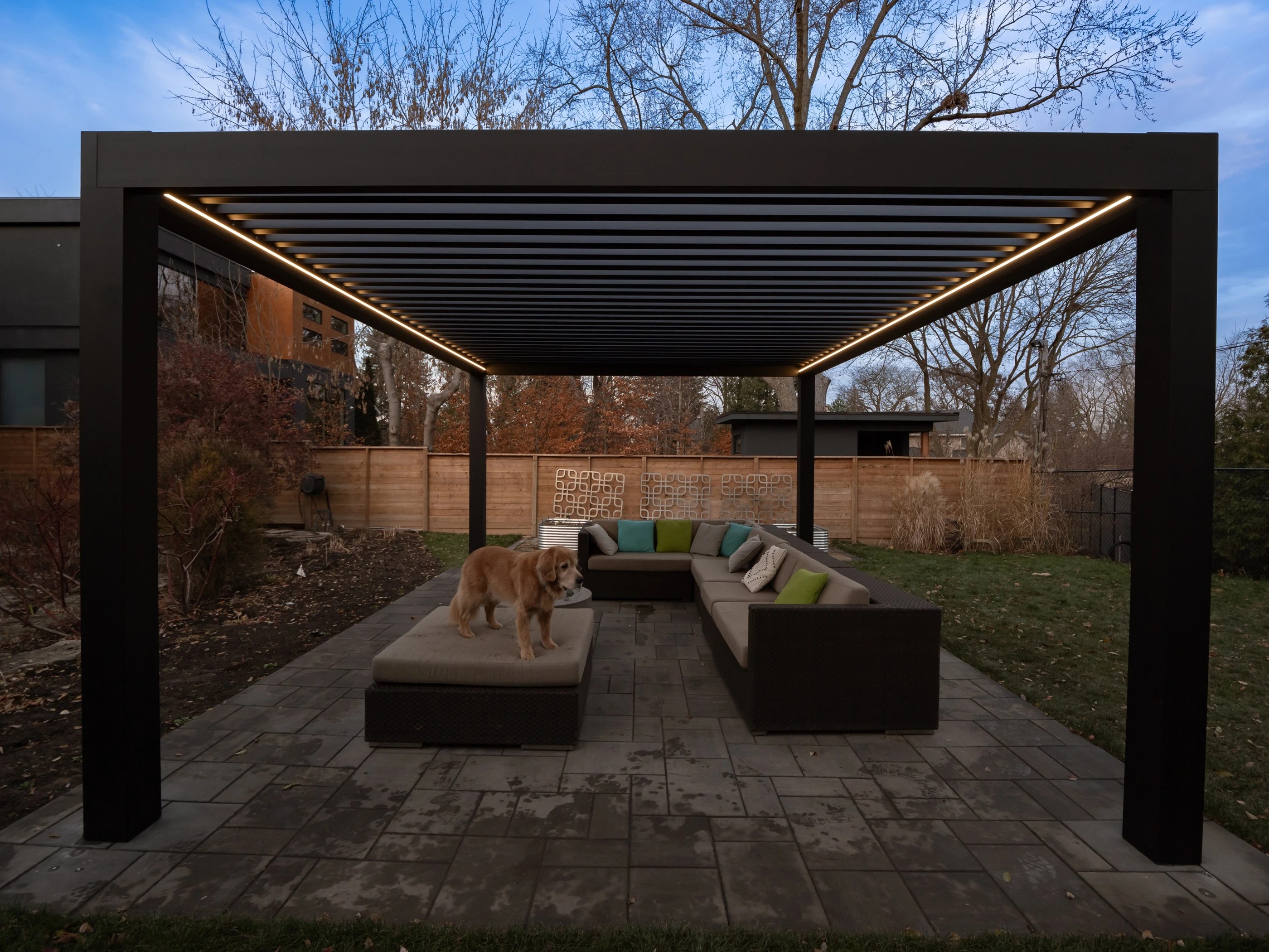
A pergola is a an outdoor structural framework of vertical posts and horizontal beams. It provides partial coverage while defining a functional outdoor area. Popularity arises from structural reliability, minimal maintenance, and adaptability to diverse climates.
Definition of a Pergola
A pergola consists of vertical posts, horizontal beams, rafters, and sometimes roof panels. These roof panels can be open, solid, or adjustable. Pergolas are constructed from wood, aluminum, steel, or a combination of these materials. The performance of the structure depends on the material used, the cross-section dimensions, the connection type, and the strength of the fasteners. Weather protection is provided by fixed or adjustable panels, which control sunlight, rain, and ventilation.
Main Types of Pergolas
Pergolas vary in structure and performance depending on design and material. Classification helps determine functional characteristics, durability, and maintenance requirements. Design classifications:
- Traditional – timber frames with open slats, classical form.
- Modern – metal frames, geometric profiles, minimal decoration.
- Open-grid -lattice or trellis for plant support without solid coverage.
- Louvered – adjustable slats for controlled sun and precipitation.
Material classifications:
- Wood – the material’s natural beauty needs at least sealing or staining, and it has moderate durability.
- Aluminum – lightweight, corrosion-resistant, and low-maintenance.
- Steel – highest strength, heavier weight, requires coating to prevent corrosion.
- Composite – synthetic blend, long-lasting, minimal maintenance, and moderate rigidity.
Benefits of Adding a Pergola
Pergolas define activity zones, reduce direct sunlight, and support attachments such as lighting or climbing plants. Roof type and material determine shade level, ventilation, and weather resistance. Pergolas increase the usability of exterior areas while maintaining airflow.
Choosing the Right Pergola
Pergola selection should be based on environmental conditions, functional requirements, and long-term performance. Material, roof type, and dimensions must match expected loads, climate, and intended usage.
Selection checklist:
- Material suitability for local climate and expected loads.
- Roof configuration – open, fixed, or louvered.
- Dimensions and post spacing relative to area usage.
- Maintenance schedule and cleaning requirements.
- Compatibility with electrical or decorative attachments.
- Cost versus long-term durability and performance.
Ideal Use Cases
Pergolas are applicable in both residential and commercial environments. Residential installations include gardens, terraces, decks, al fresco dining areas, hot tub zones, and guest areas. Commercial installations consist of outdoor restaurant terraces, hotel patios, café al fresco spaces, and multi-unit residential courtyards. They define functional outdoor space, provide partial overhead coverage, and allow ventilation. Modular configurations permit extension or reconfiguration without altering primary structural components.
Maintenance
Wood is the most maintenance-intensive of all. It should be frequently checked, sealed, or even stained to be protected from decay. Metal structures require cleaning and periodic inspection of moving parts. On the other hand, composite pergolas require no care beyond occasional pressure washing.
A pergola is an architectural element intended to provide filtered shade, divide outdoor space, and add order. Careful placement, as well as judicious use of materials, can ensure that space is utilized optimally while keeping maintenance costs low.
